


Arizona and California’s chief water negotiators are coming for Colorado in a blistering public pressure campaign aimed at getting upper basin states to capitulate.
In an interview with the L.A. Times, the negotiator for California accused the upper basin states of Wyoming, Colorado, Utah and New Mexico of clinging to “their most aggressive and rigid dreamland legal positions.”
In an op-ed for The Denver Post, Arizona’s negotiator suggested failing to come to the table with cuts could “let slip the dogs of war.”
This over-the-top hyperbole from both men illustrates just how poorly conversations to save the Colorado River are going behind closed doors. The federal government has given the seven states that rely on the Colorado River a deadline of Nov. 11 to commit to a general compromise on water use. Obviously, a consensus agreement would be far better than the Trump administration’s Department of Natural Resources implementing its own plan.
But when it comes to protecting Colorado’s interests, we will fire back with our own hyperbole — almost everyone is hurting from water restrictions during what has been deemed a “mega drought.” California and Arizona are overdue to share in that pain.
“When you see years that are like 2020 to 2021 where (Colorado) took an over 1 million acre foot reduction, that’s not a compensated reduction. No one delivered a check and kudos,” Rebecca Mitchell, director of the Colorado Water Conservation Board and our state’s negotiator, told The Denver Post editorial board in an interview this week. “We did them because Mother Nature demanded them … Part of the issue is that no shortages were taken in the lower basin until 2022; meanwhile, during the period of these guidelines, we take shortages all the time.”
Some things are non-negotiable as the states work to divvy up the water that flows down the Colorado River every year. For example, Native American tribes should face smaller cuts than other users. The U.S. government forced indigenous peoples onto often inhospitable tracts of land, and now we must make good on promised water rights and water delivery. Tribal nations must be protected. In Arizona, almost half of the water flowing through the Central Arizona Project canal goes to Native American Tribes, meaning that Phoenix and its suburbs are going to face the lion’s share of the state’s cuts.
The other non-negotiable is that Colorado will not further curtail its use of the Colorado River without major concessions from California and Arizona.
Colorado’s water use is based on a prior appropriations system, which means that every year, some junior water rights holders do not get their full allotment because there isn’t enough snowpack. Lower basin states, meanwhile, have failed to adjust their use to compensate for the drought, draining the reserves in Lake Powell and Lake Mead. The upper basin states use less water than what is allotted to them in the compact, while the lower basin states use more.
We fear that for too long, water managers up and down the river have been reluctant to implement the extreme measures needed. Because the harsh truth is that municipalities can only do so much. The vast majority of the water drawn from the Colorado River goes to agriculture and commercial interests, especially golf courses, industrial and data centers, oil and gas operations, and the Imperial Valley in California. These users are the ones who will be hit the hardest by coming reductions.
Denver Water users (who get most of their drinking water from snow melt that otherwise would flow into the Colorado River) have curtailed our use by 36% since 2000 despite a boom in population growth. Today, Denver Water users consume an average of 119 gallons per capita per day. Southern California’s Metropolitan Water District customers, which serves Los Angeles, use an average of 114 gallons per capita per day.
In Phoenix, residential users consume about 92 gallons per capita per day. In Las Vegas, the water use is 89 gallons per person per day, and a substantial amount of the city’s water is recycled, meaning it doesn’t come from the Colorado River.
While LA and Denver receive similar amounts of rainfall every year, Phoenix and Las Vegas are two of the driest cities in the country. If they can reduce their use so low, so can every other city in this nation.

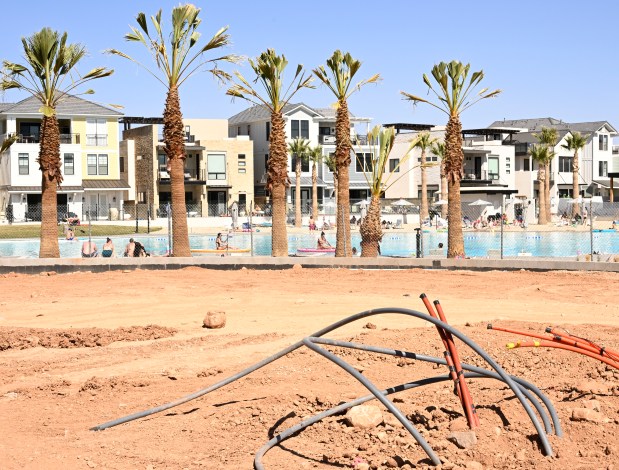
Deserts like Phoenix and St. George, where less than an inch of rain falls every year and the high temperatures in summer often top 110 degrees, may have to follow Las Vegas and put a moratorium on golf courses unless they find a sustainable water alternative. And no, groundwater is not sustainable.
Farmers in the Imperial Valley, who faced cuts beginning in 2020 that led to some fields being left fallow, will have to reconsider their crops, invest in water-saving irrigation systems, and possibly reduce their yield. Everyone will pay for these changes at the grocery store, whether it is the increased price of meat as the price of alfalfa hay skyrockets, or the increased price of water-hungry produce like almonds and pistachios.
A compromise between states rather than a unilateral decision by the Department of Natural Resources, followed by a protracted legal battle, will reduce how drastic cuts are. Using less water today could start the recharge of Lake Mead and Lake Powell, both of which are nearing dead pool status and are around 30% full.
Coloradans have always been ready to do our part to save the river, but we will not further cut our use to support reckless downstream users.
Everyone can pull together — municipalities preventing unsustainable growth and development, aesthetic or non-functional turf grass must be strictly limited and our agricultural communities must be supported as they transition to water efficient irrigation systems and less water-intensive crops.
This is an emergency, and Colorado’s water negotiators are right to stand firm defending Colorado.
Sign up for Sound Off to get a weekly roundup of our columns, editorials and more.
To send a letter to the editor about this article, submit online or check out our guidelines for how to submit by email or mail.