


By MATT O’BRIEN (AP Technology Writer)
U.S. antitrust enforcers are opening an inquiry into the relationships between leading artificial intelligence startups such as ChatGPT-maker OpenAI and the tech giants that have invested billions of dollars into them.
The action targets Amazon, Google and Microsoft and their sway over the generative AI boom that’s fueled demand for chatbots such as ChatGPT, and other AI tools that can produce novel imagery and sound.
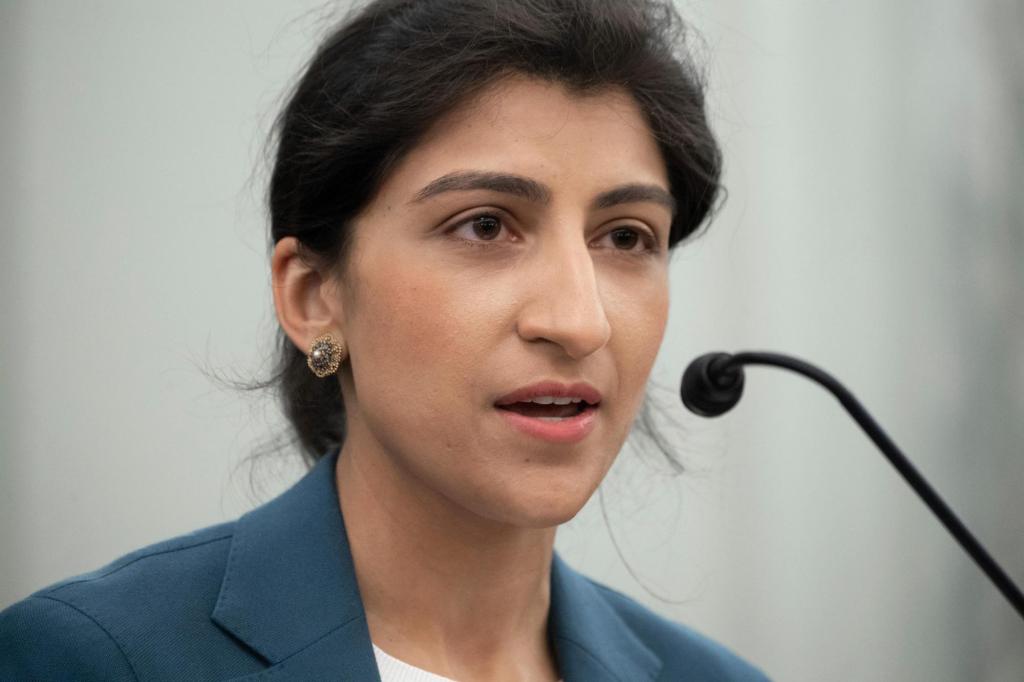
“We’re scrutinizing whether these ties enable dominant firms to exert undue influence or gain privileged access in ways that could undermine fair competition,” said Lina Khan, chair of the U.S. Federal Trade Commission, in opening remarks at a Thursday AI forum.
Khan said the market inquiry would review “the investments and partnerships being formed between AI developers and major cloud service providers.”
The FTC said Thursday it issued “compulsory orders” to five companies — cloud providers Amazon, Google and Microsoft, and AI startups Anthropic and OpenAI — requiring them to provide information about their agreements and the decision-making around them.
Microsoft’s years-long relationship with OpenAI is the best known. Google and Amazon have more recently made multibillion-dollar deals with Anthropic, another San Francisco-based AI startup formed by former leaders at OpenAI.
Google welcomed the FTC inquiry in a statement Thursday that also took a not-so-veiled dig at Microsoft’s OpenAI relationship and its history of inviting antitrust scrutiny over its business practices.
“We hope the FTC’s study will shine a bright light on companies that don’t offer the openness of Google Cloud or have a long history of locking-in customers – and who are bringing that same approach to AI services,” Google’s statement said.
Microsoft’s Rimy Alaily, a corporate vice president for competition and market regulation, also said the company looks forward to cooperating with the FTC and defended such partnerships as “promoting competition and accelerating innovation.”
Amazon, Anthropic and OpenAI declined comment.
The European Union and the United Kingdom have already signaled that they’re scrutinizing Microsoft’s OpenAI investments. The EU’s executive branch said this month the partnership might trigger an investigation under regulations covering mergers and acquisitions that would harm competition in the 27-nation bloc. Britain’s antitrust watchdog opened a similar review in December.
Antitrust advocates welcomed the actions from both the FTC and Europe on deals that some have derided as quasi-mergers.
“Big Tech firms know they can’t buy the top A.I. companies, so instead they are finding ways of exerting influence without formally calling it an acquisition,” said a written statement from Matt Stoller, director of research at the American Economic Liberties Project.
Microsoft has never publicly disclosed the total dollar amount of its investment in OpenAI, which Microsoft CEO Satya Nadella has described as a “complicated thing.”
“We have a significant investment,” he said on a November podcast hosted by tech journalist Kara Swisher. “It sort of comes in the form of not just dollars, but it comes in the form of compute and what have you.”
OpenAI’s governance and its relationship with Microsoft came into question last year after the startup’s board of directors suddenly fired CEO Sam Altman, who was then swiftly reinstated, in turmoil that made world headlines. A weekend of behind-the-scenes maneuvers and a threatened mass exodus of employees championed by Nadella and other Microsoft leaders helped stabilize the startup and led to the resignation of most of its previous board.
The new arrangement gave Microsoft a nonvoting board seat, though “we definitely don’t have control,” Nadella said at Davos. Part of the complications that led to Altman’s temporary ouster centered around the startup’s unusual governance structure. OpenAI started out as a nonprofit research institute dedicated to the safe development of futuristic forms of AI. It’s still governed as a nonprofit, though most of its staff works for the for-profit arm it formed several years later.
Microsoft made its first $1 billion investment in San Francisco-based OpenAI in 2019, more than two years before the startup introduced ChatGPT and sparked worldwide fascination with AI advancements.
As part of the deal, the Redmond, Washington software giant would supply computing power needed to train AI large language models on huge troves of human-written texts and other media. In turn, Microsoft would get exclusive rights to much of what OpenAI built, enabling the technology to be infused into a variety of Microsoft products.
Nadella in January compared it to a number of longstanding Microsoft commercial partnerships, such as with chipmaker Intel. Microsoft and OpenAI “are two different companies, answerable to two sets of different stakeholders with different interests,” he told a Bloomberg reporter at the World Economic Forum in Davos, Switzerland.
“So we build the compute. They then use the compute to do the training. We then take that, put it into products. And so in some sense it’s a partnership that is based on each of us really reinforcing what … each other does and then ultimately being competitive in the marketplace.”
The FTC has signaled for nearly a year that it is working to track and stop illegal behavior in the use and development of AI tools. Khan said in April that the U.S. government would “not hesitate to crack down” on harmful business practices involving AI. One target of popular concern is the use of AI-generated voices and imagery to turbocharge fraud and phone scams.
But increasingly, Khan made clear that what deserved scrutiny was not just harmful applications but the broader consolidation of market power into a handful of AI leaders who could use this “market tipping moment” to lock in their dominance.
The FTC’s three commissioners, all Democrats because two seats are vacant, voted unanimously to start the inquiry. Commissioner Alvaro Bedoya said it should “shed some light on the competitive dynamics in play with some of these most advanced models.”
The companies have 45 days to provide information to the FTC that includes their partnership agreements and the strategic rationale behind them. They’re also being asked for information about decision-making around product releases and the key resources and services needed to build AI systems.
——
AP business writer Kelvin Chan in London contributed to this report.