


By Hunter Boyce, The Atlanta Journal-Constitution
Fluoride — it’s in your toothpaste, your drinking water and now the occasional legislative bill. Two U.S. states have already decided to stop adding it to their water supplies — a trend concerning local dental experts.
Now, a new study has discovered what banning the mineral on a larger scale could mean for children and their parents. The results? Billions in added dental bills and millions of new cavities. It’s one major toothache of a projection.
What would happen if the U.S. banned fluoride?
Researchers out of Brigham and Women’s Hospital and Harvard School of Dental Medicine have completed a projection of what a nationwide fluoride ban could cost Americans in both dollars and tooth decay. The researchers used data from the National Health and Nutrition Examination Survey, the only nationwide survey to include oral health data from clinical examinations of U.S. adults and children.
Having analyzed survey data featuring 8,484 children, they predicted such a ban would increase dental costs across the U.S. by $9.8 billion within the first five years. According to Lending Tree, it already costs Georgia parents an average $201,058 to raise a single child from an infant to 18 years old. For every cavity that child gets, you can add another average $191 to the equation. And, in this projection, kids will be getting significantly more cavities.
Within the first five years of a nationwide fluoride ban, researchers estimate there would be 25.4 million more cavities reported in children. That represents about a 7.5% uptick in cases. A decade into having fluoride-free drinking water, however, those numbers could increase to $19.4 billion in additional costs and 53.8 million in cavities.
What would happen if fluoridation came to an end in Georgia? A local dentist previously spoke to The Atlanta Journal-Constitution in April, issuing a grim warning.
“It will be amazing for our business,” said Sandy Springs dentist Cary Goldstein. “We will have so much work on our hands. We’ve almost put ourselves out of business because fluoride keeps decay down.”
According to the expert, it’s a matter of preventing more major oral health issues down the road. “That small cavity in childhood leads to serious dental work in adulthood,” he later said. “It’s like cancer — we are trying to prevent it before it happens.”
It’s been 80 years since Grand Rapids, Michigan, became the first U.S. city to fluoridate its drinking water. By 1980, half the U.S. population was drinking water with fluoride. The Atlanta-based Centers for Disease Control and Prevention calls it “a cornerstone strategy for prevention of cavities in the U.S.” that is “a practical, cost-effective, and equitable way for communities to improve their residents’ oral health regardless of age, education, or income.”
It begs the question: Why do some people now want to ban it from drinking water?
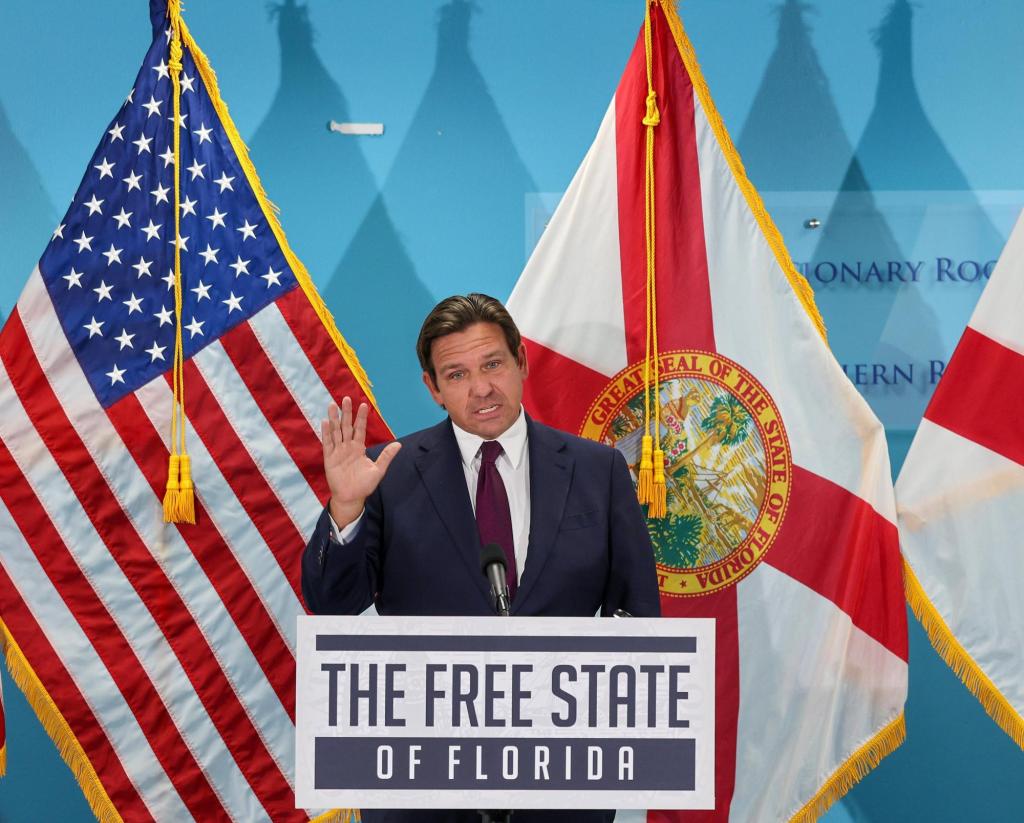
Just last month, Florida Gov. Ron DeSantis signed a new measure prohibiting the addition of fluoride to the state’s drinking water. He’s not the first governor to do it, either. Utah became the first state to ever ban fluoride in public drinking water, with all statewide water systems having ceased fluoridation on May 7.
“We have other ways where people can get access to fluoride,” DeSantis said at a public event, as reported by The Associated Press. “When you do this in the water supply, you’re taking away a choice of someone who may not want to have overexposure to fluoride.”
Fluoride overexposure has become an increasingly common talking point in government. In April, U.S. Health Secretary Robert F. Kennedy Jr. — who has referred to fluoride as a “dangerous neurotoxin” — announced plans to tell the CDC to stop recommending fluoridation nationwide.
Fluoride overexposure can lead to fluorosis — causing tooth discoloration. A 2019 review of cross-sectional studies concluded that it can potentially become neurotoxic to young children at high doses, leading to worsened cognitive function. Those doses averaged around 1 mg/L.
However, the CDC only recommends a maximum 0.7 mg/L fluoride concentration in drinking water — 30% less than the high doses observed in the study review. A 2020 study of over 38,000 wells across the U.S. determined that roughly 87% of all tested groundwater was below 0.7 mg/L in fluoride concentration. According to the new study, the current fluoride concentration recommendation is a safe one.
“These findings suggest that, despite the potential harms of excessive fluoride exposure, fluoridation at safe levels offers both individual and societal benefits that would be at risk,” the study concluded.
©2025 The Atlanta Journal-Constitution. Visit at ajc.com. Distributed by Tribune Content Agency, LLC.
Originally Published: