


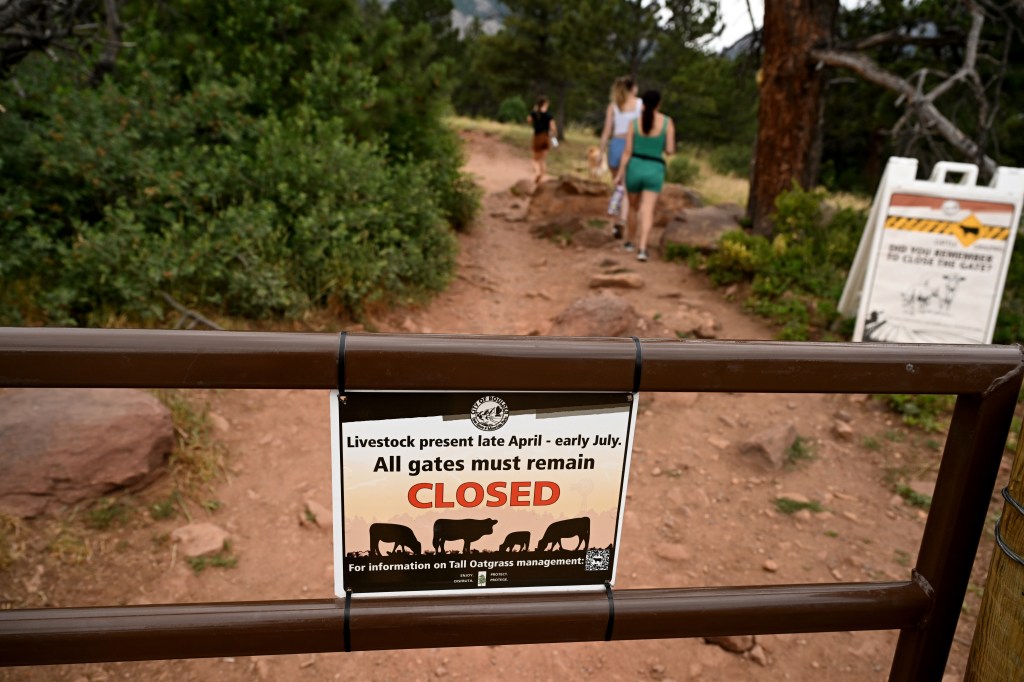
The article “Why you might have to share the trail with cows while hiking on Colorado’s public lands”, (June 24, 2024) claims that hikers encountering livestock on public lands shouldn’t panic because “The cows are supposed to be there.” This statement suggests there is something completely natural about cattle in the fragile, arid, and alpine ecosystems of Colorado. While it may be something we’ve become accustomed to, it’s not natural, and there are hidden costs of these grazing programs – land degradation, wildlife killing, and millions in taxpayer subsidies – in addition to the impact to one’s recreational experience.
In a report published last month, 32% of Bureau of Land Management grazing allotments in Colorado were failing to meet land health standards with livestock identified as the cause of the problem. That alone represents 2.4 million acres of public land. Livestock grazing results in the degradation of streamside areas, leading to hotter stream temperatures and poorer water quality for native trout, ground compaction that can harm groundwater storage, and invasions of weeds like cheatgrass.
Livestock also remove a large portion of the vegetation that supports our elk, deer, and bighorn sheep populations and provides cover for our endangered sage grouse. Diseases transmitted by domestic sheep are considered the greatest threat to bighorn sheep — our state animal.
Public lands ranching significantly contributes to climate change by livestock emissions of nitrous oxide and methane, as well as loss of soil carbon reserves by the physical impacts of grazing (increased erosion, defoliation of plants, and destruction of biological soil crusts), reducing the landscape’s potential to sequester carbon. The social costs of carbon for grazing on public land are estimated to be about $1.1 billion to $2.4 billion per year, not including the greater ecosystem costs from associated livestock management activities that reduce biodiversity, carbon stocks and rates of carbon sequestration.
Beyond the loss of ecosystem services, the cost of subsidizing public lands ranching to American taxpayers is enormous. The current public land grazing fee is $1.35 per month for one AUM (one bull or a cow and her calf), compared to the average Colorado private lease rate of $21.00 per AUM on non-irrigated pasture in 2019. That amounts to a 93.58% subsidy.
Direct government expenditures to administer public land grazing constitute an annual net loss to the taxpayers of at least $123 million and more than $500 million when indirect costs are accounted for. Those indirect costs include $166 million federal dollars spent by USDA Wildlife Services last year, a national federal program that kills “nuisance animals,” including hundreds of bobcats and bears, thousands of foxes, and tens of thousands of beavers and coyotes last year alone, mainly to protect livestock operations.
The Post’s article also minimized the risk of conflict with livestock. An average of 22 people are killed by cows each year in the U.S., striking when compared to the average number of people killed in the U.S. by the predators we are taught to fear: 0.75 for bears, 0.18 for mountain lions. There have been only two fatal wolf attacks recorded in the U.S. in the last century — both in Alaska. The facts give pause to the fear-mongering around native predators and should be weighed against which animals are really “supposed to be there” on public lands.
Public lands grazing accounts for only 1.6% of the forage feeding the American beef market, so perhaps public land users should feel stress when they encounter cows out on their public lands. They are right to be shocked that such a small fraction of our food comes at such a high price to our climate, tax dollars, recreational experience, and personal safety.
Delaney Rudy is the Colorado director of Western Watersheds Project, a nonprofit conservation group working to protect and restore wildlife and watersheds throughout the American West. She was born and raised in Colorado and lives on the Western Slope.
Sign up for Sound Off to get a weekly roundup of our columns, editorials and more.
To send a letter to the editor about this article, submit online or check out our guidelines for how to submit by email or mail.