


By ISABEL DEBRE and ALMUDENA CALATRAVA (Associated Press)
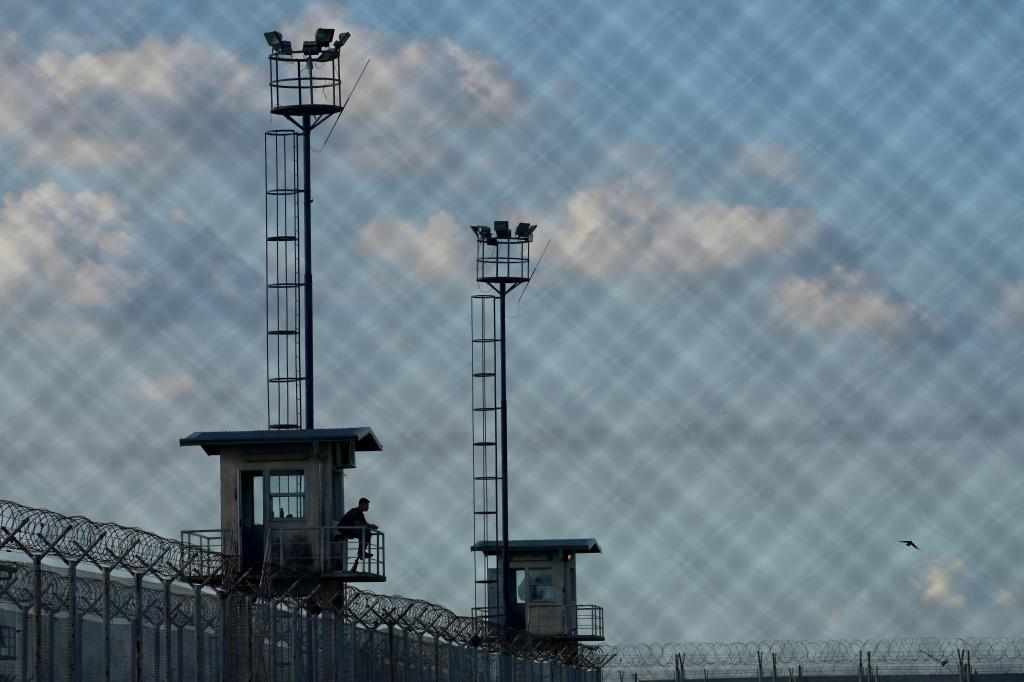
ROSARIO, Argentina (AP) — The order to kill came from inside a federal prison near Argentina’s capital. Unwitting authorities patched a call from drug traffickers tied to one of the country’s most notorious gangs to collaborators on the outside. Hiring a 15-year-old hit man, they sealed the fate of a young father they didn’t even know.
At a service station on March 9 in Rosario, the picturesque hometown of soccer star Lionel Messi, 25-year-old employee Bruno Bussanich was whistling to himself and checking the day’s earnings just before he was shot three times from less than a foot away, surveillance footage shows. The assailant fled without taking a peso.
It was the fourth gang-related fatal shooting in Rosario in almost as many days. Authorities called it an unprecedented rampage in Argentina, which had never witnessed the extremes of drug cartel violence afflicting some other Latin American countries.
A handwritten letter was found near Bussanich’s body, addressed to officials who want to curb the power drug kingpins wield from behind bars. “We don’t want to negotiate anything. We want our rights,” it says. “We will kill more innocent people.”
Shaken residents interviewed by The Associated Press across Rosario described a sense of dread taking hold.
“Every time I go to work, I say goodbye to my father as if it were the last time,” said 21-year-old Celeste Núñez, who also works at a gas station.
The string of killings offer an early test to the security agenda of populist President Javier Milei, who has tethered his political success to saving Argentina’s tanking economy and eradicating narco-trafficking violence.
Since taking office Dec. 10, the right-wing leader has promised to prosecute gang members as terrorists and change the law to allow the army into crime-ridden streets for the first time since Argentina’s brutal military dictatorship ended in 1983.
His law-and-order message has empowered the hardline governor of Santa Fe province, which includes Rosario, to clamp down on incarcerated criminal gangs that authorities say orchestrated 80% of shootings last year. Under the orders of Governor Maximiliano Pullaro, police have ramped up prison raids, seized thousands of smuggled cellphones and restricted visits.
“We are facing a group of narco-terrorists desperate to maintain power and impunity,” Milei said after Bussanich was killed, announcing the deployment of federal forces in Rosario. “We will lock them up, isolate them, take back the streets.”
Milei won 56% of the vote in Rosario, where residents praise his focus on a problem largely neglected by his predecessors. But some worry the government’s combative approach traps them in the line of fire.
Gangs started their deadly retaliations just hours after Pullaro’s security minister shared photos showing Argentine prisoners crammed together on the floor, heads pressed against each other’s bare backs — a scene reminiscent of El Salvador President Nayib Bukele’s harsh anti-gang crackdown.
“It’s a war between the state and the drug traffickers,” said Ezequiel, a 30-year-old employee at the gas station where Bussanich was killed. Ezequiel, who gave only his first name for fear of reprisals, said his mother has since begged him to quit. “We’re the ones paying the price.”
Even Milei’s supporters have mixed feelings about the crackdown, including Germán Bussanich, the father of the slain gas station worker.
“They’re putting on a show and we’re facing the consequences,” Bussanich told reporters.
A leafy city 300 kilometers (180 miles) northwest of Buenos Aires, Rosario is where revolutionary Ernesto “Che” Guevara was born, Messi first kicked a soccer ball and the Argentine flag was first raised in 1812. But it most recently won notoriety because its homicide numbers are five times the national average.
Tucked into a bend in the Paraná River, Rosario’s port morphed into Argentina’s drug trafficking hub as regional crackdowns pushed the narcotics trade south and criminals started squirreling away cocaine in shipping containers spirited down the river to markets abroad. Although Rosario never suffered the car bombs and police assassinations gripping Mexico, Colombia and most recently Ecuador, the splintering of street gangs has fueled bloodshed.
“It’s not close to the violence in Mexico because we still have the deterrence capacity of the government in Argentina,” said Marcelo Bergman, a social scientist at the National University of Tres de Febrero in Argentina. “But we need to keep an eye on Rosario because the major threats come not so much from big cartels but when these groups proliferate and diversify.”
Drug traffickers keep a tight grip over Rosario’s poor neighborhoods full of young men vulnerable to recruitment. One of them was Víctor Emanuel, a 17-year-old killed two years ago by rival gangsters in an area where street murals pay tribute to slain criminal leaders. No one was arrested.
“My neighbors know who’s responsible,” his mother, Gerónima Benítez, told the AP, her eyes shiny with tears. “I looked for help everywhere, I knocked on the doors of the judiciary, the government. No one answered.”
A fearful existence is all Benítez has ever known. But now, for the first time in Argentina, warring drug traffickers are banding together and terrorizing parts of the city previously considered safe.
Imprisoned gang leaders in Latin America have long run criminal enterprises remotely with the help of corrupt guards. But according to an indictment unveiled last week, incarcerated gang bosses in Argentina have been passing instructions on how to kill random civilians via family visits and video calls.
Court documents say the bosses paid underage hit men up to $450 to target four of the recent victims in Argentina’s third-largest city. The killing of Bussanich, two taxi drivers and a bus driver in less than a week in March, federal prosecutors say, “shattered the peace of an entire society.”
Street emptied. Schools closed. Bus drivers picketed. People were too terrified to leave their homes.
“This violence is on another level,” 20-year-old Rodrigo Dominguez said from an intersection where a dangling banner demanded justice for another bus driver slain there weeks earlier. “You can’t go outside.”
Panic was still palpable in Rosario last week, as police swarmed the streets and normally bustling bars closed early for lack of customers. A diner managed by Messi’s family, a draw for fans, reported quiet nights and less profit. Women in one neighborhood said they carry 22‐caliber pistols. Analía Manso, 37, said she was too scared to send her children to school.
Pope Francis last month said he was praying for his countrymen in Rosario.
Assaults and public threats continue. This month, a sign appeared on a highway overpass warning Argentine Security Minister Patricia Bullrich that gangs would extend their offensive to Buenos Aires if the government doesn’t back down.
Authorities have sought to reassure the public by sending hundreds of federal agents into Rosario. The AP spent a night with police last week as officers patrolled neighborhoods logging suspicious activity and setting up checkpoints.
Georgina Wilke, a 45-year-old Rosario officer in the explosives squad, said she welcomes federal intervention, including the military, to get crime under control. “We’ve been hit very hard,” Wilke said.
Omar Pereira, the provincial secretary of public security, promised the efforts represent a shift from failed tactics of the past.
“There were always pacts, implicit or explicit, between the state and criminals,” Pereira said, describing how authorities long looked the other way. “What’s the idea of this government? There is no pact.”
But experts are skeptical a tough-on-crime approach will stop drug traffickers from buying control over Argentina’s police and prisons.
“Unless the government fixes its problems with corruption, the crackdown on prisons is unlikely to have any long-term effect,” said Christopher Newton, an investigator at Colombia-based research organization InSight Crime.
For years, Rosario’s 1.3 million residents have watched warily as presidents and their promises come and go while the violence endures.
“It’s like a cancer that grows and grows,” said Benítez from her home, its windows protected by wrought-iron bars.
“We, on the outside, live in prison,” she said. “Those inside have everything.”